
Top 7 San Diego Sexual Assault Defense Strategies to Protect Your Rights - Victor Orsatti
29
Jun
Top 7 San Diego Sexual Assault Defense Strategies to Protect Your Rights
Table of Contents
- 1. Understanding Sexual Assault Charges in California
- 2. Immediate Actions You Should Take After an Arrest
- 3. Building a Strong Defense Investigation
- 4. Challenging Evidence and Witness Credibility
- 5. Negotiating Plea Agreements vs. Going to Trial
- 6. Protecting Your Rights During Police Interviews
- 7. Securing Your Future With Record Expungement Options
- Frequently Asked Questions (FAQ)
1. Understanding Sexual Assault Charges in California
Sexual assault allegations carry devastating consequences. A conviction can result in mandatory sex offender registration, lengthy incarceration, employment termination, housing rejection, and irreversible damage to your reputation. If you’re facing these charges in San Diego County, understanding your defense options and acting quickly is essential to protecting your rights and your future.
At the Law Offices of Victor Orsatti, we’ve defended countless clients through felony and misdemeanor sexual assault cases. We know the system, the evidence challenges, and the strategies that work. This guide outlines seven critical defense approaches we use to give our clients the strongest possible position.
California sexual assault law is complex and covers multiple distinct offenses. Penal Code 261 addresses rape, while PC 264 covers assault with intent to commit rape. Other charges include indecent exposure (PC 314), lewd conduct (PC 288), and statutory rape (PC 261.5). Each carries different elements prosecutors must prove beyond a reasonable doubt.
The specific charge matters enormously for your defense strategy. A lewd conduct case may focus on whether an act was genuinely sexual in nature, while a rape allegation hinges on lack of consent and force. Prosecutors must establish every element of the crime. If even one element fails, the case falls apart.
Many people assume sexual assault requires physical violence. California law is broader: it includes any non-consensual sexual act, regardless of whether force was used. This distinction changes how we approach your defense. Understanding these nuances allows us to identify weaknesses in the prosecution’s case early and develop targeted strategies to challenge the charges.
Actionable takeaway: Request a detailed breakdown of the specific charges against you. Know exactly what elements the prosecution must prove, as this determines which facts you challenge first.
2. Immediate Actions You Should Take After an Arrest
Your first hours matter. Do not speak to police without representation present. Many defendants believe cooperating helps their case; it typically doesn’t. Anything you say can and will be used against you, even if you explain your innocence truthfully.
If arrested, follow these steps immediately:
- Clearly state: “I want to speak with my attorney before answering any questions”
- Remain calm and respectful; never resist or escalate the situation
- Do not consent to searches of your phone, computer, or residence
- Write down the names and badge numbers of all officers present
- Request a phone call and contact us for emergency representation
We offer 24/7 free consultations in San Diego County. Call us as soon as you’re able. Early intervention allows us to preserve evidence, file protective orders if needed, and prevent damaging statements from being recorded or used against you.
Police interviews often contain leading questions and psychological pressure designed to elicit confessions. Innocent people confess under these conditions regularly. Your attorney’s presence protects you from this risk and ensures your rights remain intact from the start.
Actionable takeaway: Memorize a criminal defense attorney’s number before you need it. If arrested, your immediate silence and request for representation may be the single most important decision you make.
3. Building a Strong Defense Investigation
Prosecution cases rest on evidence. We investigate that evidence thoroughly and independently. This means examining police reports line-by-line, identifying inconsistencies, gaps, and contradictions. We interview witnesses, secure surveillance footage, collect digital evidence, and reconstruct timelines.
In sexual assault cases, investigation focuses on consent. Did the alleged victim consent? What evidence exists to support either position? Text messages, emails, social media interactions, and witness testimony often reveal a different narrative than the one police present.
We also examine police procedure. Were proper protocols followed during arrest and evidence collection? Were Miranda rights read correctly? Was the search warrant valid? Procedural violations can result in evidence being suppressed, which weakens the prosecution’s case significantly.
Medical evidence receives particular attention. We review hospital reports, evidence collection procedures, and any contradictions between medical findings and the alleged victim’s statements. Toxicology reports, surveillance footage, and third-party witness accounts often tell a more complete story than initial allegations.
Our investigation team works systematically to uncover facts the prosecution overlooked or mischaracterized. This foundation allows us to negotiate from strength or present a compelling trial defense.
Actionable takeaway: Compile a detailed timeline of your activities before and after the alleged incident. Document any evidence that supports your account, including digital records, messages, and witness contact information.
4. Challenging Evidence and Witness Credibility
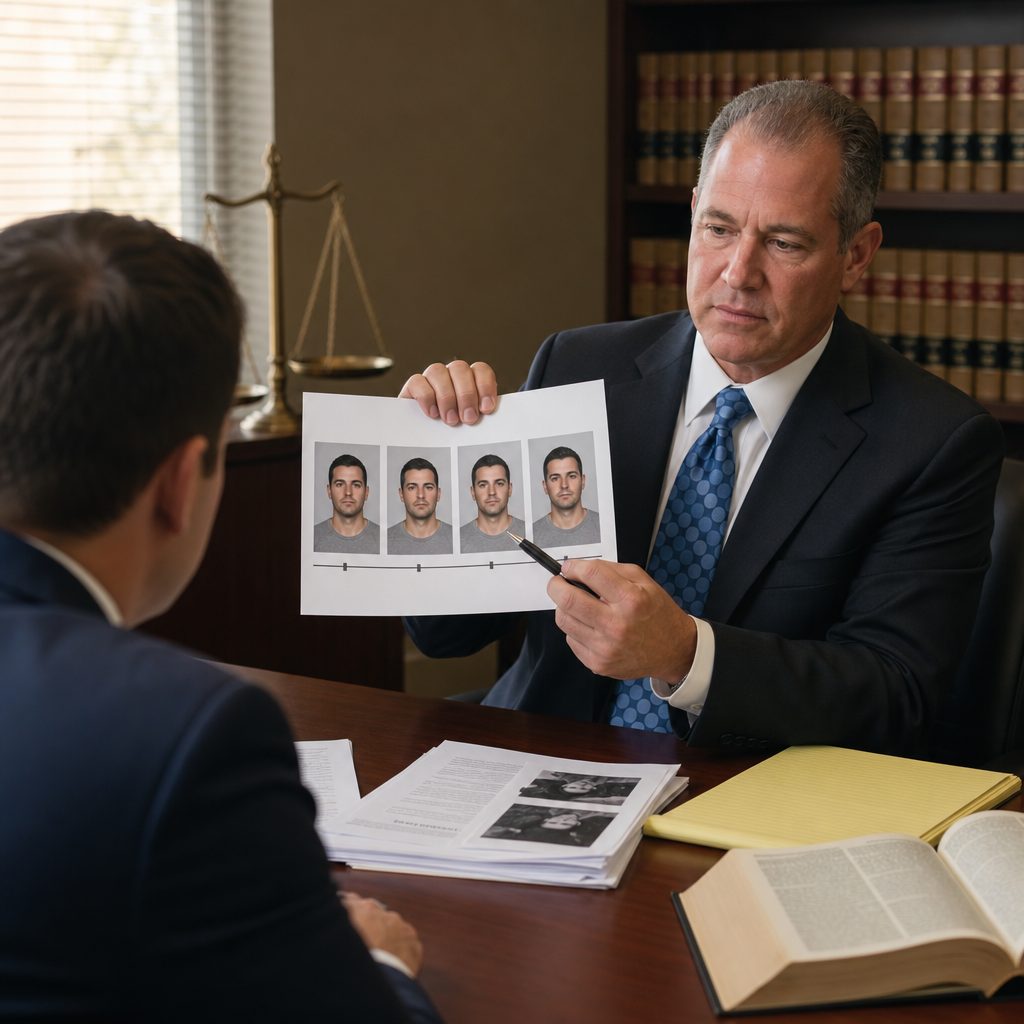
Not all evidence is created equal. Our role includes aggressively challenging the quality and reliability of the prosecution’s evidence. This includes eyewitness identification, which is notoriously unreliable despite its persuasive appearance at trial.
Memory research shows eyewitness testimony contains consistent errors. Witnesses misidentify suspects due to stress, poor lighting, brief exposure, and suggestive police procedures. We cross-examine witnesses thoroughly, highlighting inconsistencies in their statements, prior identifications, and behavioral patterns that suggest unreliability.
DNA evidence, when present, is scrutinized for contamination, chain-of-custody breaks, and laboratory error. Digital forensics experts examine cellphone data and metadata. Text message timing can prove you were elsewhere when the alleged assault occurred. We use every available technical avenue to test the prosecution’s case.
Witness credibility is central. If the alleged victim has made prior false allegations, engaged in inconsistent statements, or has motive to fabricate, we present this to the jury. We also examine law enforcement credibility. Did police rush to judgment? Ignore exculpatory evidence? These tactics undermine their entire case.
Character witnesses for you matter too. We carefully select individuals who can testify to your character, your relationships, and facts that contradict the prosecution’s narrative. Strategic witness selection strengthens trial presentation considerably.
Actionable takeaway: Identify anyone who can corroborate your account or testify to your character. Document their contact information and what they can verify about your actions and whereabouts.
5. Negotiating Plea Agreements vs. Going to Trial
Not every case proceeds to trial. Sometimes negotiation produces better outcomes. Prosecutors may have weak evidence, inconsistent witnesses, or legal vulnerabilities. When this exists, we leverage it to negotiate reduced charges, dismissed counts, or favorable plea terms.
Plea agreements can eliminate mandatory sex offender registration, reduce felony charges to misdemeanors, or avoid prison time entirely. These are serious negotiations requiring experience and credibility. Prosecutors respect attorneys who try cases successfully; they’re more willing to negotiate with us because they know we’re prepared for trial.
However, never plead guilty unless it’s genuinely in your interest. We present both options clearly: the trial risks and the plea benefits. Some cases should proceed to trial because the evidence is insufficient or your defense is strong. Others benefit from negotiation that avoids worst-case outcomes.
Your personal circumstances matter. Employment, housing, family status, and immigration status all factor into whether trial or negotiation serves you better. We discuss these factors openly and let you decide based on complete information.
Going to trial means a jury evaluates the evidence. If we’ve built a strong investigation and identified credible defense strategies, trial can result in acquittal. This protects your record and your future. We prepare every case for trial, ensuring we’re ready whether negotiation succeeds or trial becomes necessary.
Actionable takeaway: Ask your attorney to explain both the plea offer and the trial scenario, including risks, probabilities, and long-term consequences. Make your decision only after understanding both paths completely.
6. Protecting Your Rights During Police Interviews
Police will attempt to interview you or contact you. Your instinct may be to explain yourself, especially if you’re innocent. This is exactly the wrong approach. Police interviews are recorded and presented selectively at trial. Nervous speech, contradictions due to stress, or misunderstood questions all become evidence against you.
We intercept police contact before interviews occur. We provide a clear message to law enforcement: all communications go through us. This establishes a professional boundary that protects you from coercion, manipulation, and self-incrimination.
If police contact you directly despite your request for representation, refuse to answer. Provide nothing beyond your name and attorney contact information. Do not explain your innocence, your relationship with the alleged victim, or where you were. Any statement, even an innocent one, can be twisted or misremembered by the officer who reports it.
Digital evidence presents similar risks. Police will seek access to your phone, computer, and social media accounts. We work with digital forensics specialists to review what police have and what they want. Strategic disclosure of some evidence while protecting other materials is a precise balance we manage.
Witness pressure is another tactic. Police sometimes interview friends and family, implying you made confessions to them or asking them to convince you to talk. We prepare clients and loved ones for these tactics and provide clear guidance on handling police contact.
Actionable takeaway: Provide police with your attorney’s contact information. Do not speak with them, answer calls from unknown numbers, or respond to messages about the case. Let your attorney manage all communication.
7. Securing Your Future With Record Expungement Options
Even if you’re acquitted or charges are dismissed, the arrest record remains public. This affects employment, housing, professional licensing, and reputation. California law provides expungement options that seal or delete these records under certain circumstances.
We guide clients through expungement options in San Diego carefully. If you’re convicted, PC 1203.4 expungement allows you to withdraw your guilty plea and have charges dismissed. This doesn’t erase the conviction entirely, but it significantly improves your situation for employment and housing purposes.
If charges are dismissed or you’re acquitted, expungement is automatic in many cases. Your record can be sealed, meaning arrests and court proceedings disappear from public view. Some employers and licensing boards won’t see the record at all.
Record clearance changes your life trajectory. You can answer “no” to questions about arrests in many employment contexts. Professional licenses become possible. Your future isn’t defined by a single incident from years past.
Planning for expungement begins during your defense, not after. We structure your case with expungement possibilities in mind, making the process smoother and faster once the criminal matter resolves.
Actionable takeaway: Ask your attorney about expungement eligibility at the beginning of your case. Understanding your post-resolution options provides clarity and hope during a difficult period.
—
Sexual assault allegations demand immediate, serious legal attention. The strategies outlined above represent how we defend San Diego County clients facing these charges. We’ve successfully challenged evidence, negotiated favorable terms, and won trials across Southern California.
If you’re facing sexual assault charges, don’t wait. Contact the Law Offices of Victor Orsatti for a free 24/7 consultation. We provide affordable, flat-fee criminal defense representation with flexible payment plans. We understand the system, the stakes, and what it takes to protect your rights and your future. Let us put our experience to work for you.
Frequently Asked Questions (FAQ)
What should I do immediately after a sexual assault arrest in San Diego County?
We recommend contacting our office right away to discuss your case before speaking with police. It’s critical that you exercise your right to remain silent and request an attorney present during any questioning. We can help you understand your options and begin building your defense strategy while protecting your constitutional rights.
How can we challenge evidence and witness credibility in a sexual assault case?
We conduct thorough investigations to identify inconsistencies in witness statements, gaps in physical evidence, and procedural errors that may have occurred during the investigation or arrest. Our approach includes expert analysis of forensic evidence, cross-examination preparation, and uncovering any factors that could undermine the prosecution’s case against you.
Can I get my sexual assault charge removed from my record if the case is dismissed or I’m acquitted?
Yes, we help our clients pursue record expungement options following a favorable outcome. Even with a dismissal or acquittal, you’ll need to petition the court to seal your record. We handle the entire expungement process so you can move forward without the burden of a criminal record affecting your employment and future opportunities.
Top 7 San Diego Sexual Assault Defense Strategies to Protect Your Rights
Table of Contents
- 1. Understanding Sexual Assault Charges in California
- 2. Immediate Actions You Should Take After an Arrest
- 3. Building a Strong Defense Investigation
- 4. Challenging Evidence and Witness Credibility
- 5. Negotiating Plea Agreements vs. Going to Trial
- 6. Protecting Your Rights During Police Interviews
- 7. Securing Your Future With Record Expungement Options
- Frequently Asked Questions (FAQ)
1. Understanding Sexual Assault Charges in California
Sexual assault allegations carry devastating consequences. A conviction can result in mandatory sex offender registration, lengthy incarceration, employment termination, housing rejection, and irreversible damage to your reputation. If you’re facing these charges in San Diego County, understanding your defense options and acting quickly is essential to protecting your rights and your future.
At the Law Offices of Victor Orsatti, we’ve defended countless clients through felony and misdemeanor sexual assault cases. We know the system, the evidence challenges, and the strategies that work. This guide outlines seven critical defense approaches we use to give our clients the strongest possible position.
California sexual assault law is complex and covers multiple distinct offenses. Penal Code 261 addresses rape, while PC 264 covers assault with intent to commit rape. Other charges include indecent exposure (PC 314), lewd conduct (PC 288), and statutory rape (PC 261.5). Each carries different elements prosecutors must prove beyond a reasonable doubt.
The specific charge matters enormously for your defense strategy. A lewd conduct case may focus on whether an act was genuinely sexual in nature, while a rape allegation hinges on lack of consent and force. Prosecutors must establish every element of the crime. If even one element fails, the case falls apart.
Many people assume sexual assault requires physical violence. California law is broader: it includes any non-consensual sexual act, regardless of whether force was used. This distinction changes how we approach your defense. Understanding these nuances allows us to identify weaknesses in the prosecution’s case early and develop targeted strategies to challenge the charges.
Actionable takeaway: Request a detailed breakdown of the specific charges against you. Know exactly what elements the prosecution must prove, as this determines which facts you challenge first.
2. Immediate Actions You Should Take After an Arrest
Your first hours matter. Do not speak to police without representation present. Many defendants believe cooperating helps their case; it typically doesn’t. Anything you say can and will be used against you, even if you explain your innocence truthfully.
If arrested, follow these steps immediately:
- Clearly state: “I want to speak with my attorney before answering any questions”
- Remain calm and respectful; never resist or escalate the situation
- Do not consent to searches of your phone, computer, or residence
- Write down the names and badge numbers of all officers present
- Request a phone call and contact us for emergency representation
We offer 24/7 free consultations in San Diego County. Call us as soon as you’re able. Early intervention allows us to preserve evidence, file protective orders if needed, and prevent damaging statements from being recorded or used against you.
Police interviews often contain leading questions and psychological pressure designed to elicit confessions. Innocent people confess under these conditions regularly. Your attorney’s presence protects you from this risk and ensures your rights remain intact from the start.
Actionable takeaway: Memorize a criminal defense attorney’s number before you need it. If arrested, your immediate silence and request for representation may be the single most important decision you make.
3. Building a Strong Defense Investigation
Prosecution cases rest on evidence. We investigate that evidence thoroughly and independently. This means examining police reports line-by-line, identifying inconsistencies, gaps, and contradictions. We interview witnesses, secure surveillance footage, collect digital evidence, and reconstruct timelines.
In sexual assault cases, investigation focuses on consent. Did the alleged victim consent? What evidence exists to support either position? Text messages, emails, social media interactions, and witness testimony often reveal a different narrative than the one police present.
We also examine police procedure. Were proper protocols followed during arrest and evidence collection? Were Miranda rights read correctly? Was the search warrant valid? Procedural violations can result in evidence being suppressed, which weakens the prosecution’s case significantly.
Medical evidence receives particular attention. We review hospital reports, evidence collection procedures, and any contradictions between medical findings and the alleged victim’s statements. Toxicology reports, surveillance footage, and third-party witness accounts often tell a more complete story than initial allegations.
Our investigation team works systematically to uncover facts the prosecution overlooked or mischaracterized. This foundation allows us to negotiate from strength or present a compelling trial defense.
Actionable takeaway: Compile a detailed timeline of your activities before and after the alleged incident. Document any evidence that supports your account, including digital records, messages, and witness contact information.
4. Challenging Evidence and Witness Credibility
Not all evidence is created equal. Our role includes aggressively challenging the quality and reliability of the prosecution’s evidence. This includes eyewitness identification, which is notoriously unreliable despite its persuasive appearance at trial.
Memory research shows eyewitness testimony contains consistent errors. Witnesses misidentify suspects due to stress, poor lighting, brief exposure, and suggestive police procedures. We cross-examine witnesses thoroughly, highlighting inconsistencies in their statements, prior identifications, and behavioral patterns that suggest unreliability.
DNA evidence, when present, is scrutinized for contamination, chain-of-custody breaks, and laboratory error. Digital forensics experts examine cellphone data and metadata. Text message timing can prove you were elsewhere when the alleged assault occurred. We use every available technical avenue to test the prosecution’s case.
Witness credibility is central. If the alleged victim has made prior false allegations, engaged in inconsistent statements, or has motive to fabricate, we present this to the jury. We also examine law enforcement credibility. Did police rush to judgment? Ignore exculpatory evidence? These tactics undermine their entire case.
Character witnesses for you matter too. We carefully select individuals who can testify to your character, your relationships, and facts that contradict the prosecution’s narrative. Strategic witness selection strengthens trial presentation considerably.
Actionable takeaway: Identify anyone who can corroborate your account or testify to your character. Document their contact information and what they can verify about your actions and whereabouts.
5. Negotiating Plea Agreements vs. Going to Trial
Not every case proceeds to trial. Sometimes negotiation produces better outcomes. Prosecutors may have weak evidence, inconsistent witnesses, or legal vulnerabilities. When this exists, we leverage it to negotiate reduced charges, dismissed counts, or favorable plea terms.
Plea agreements can eliminate mandatory sex offender registration, reduce felony charges to misdemeanors, or avoid prison time entirely. These are serious negotiations requiring experience and credibility. Prosecutors respect attorneys who try cases successfully; they’re more willing to negotiate with us because they know we’re prepared for trial.
However, never plead guilty unless it’s genuinely in your interest. We present both options clearly: the trial risks and the plea benefits. Some cases should proceed to trial because the evidence is insufficient or your defense is strong. Others benefit from negotiation that avoids worst-case outcomes.
Your personal circumstances matter. Employment, housing, family status, and immigration status all factor into whether trial or negotiation serves you better. We discuss these factors openly and let you decide based on complete information.
Going to trial means a jury evaluates the evidence. If we’ve built a strong investigation and identified credible defense strategies, trial can result in acquittal. This protects your record and your future. We prepare every case for trial, ensuring we’re ready whether negotiation succeeds or trial becomes necessary.
Actionable takeaway: Ask your attorney to explain both the plea offer and the trial scenario, including risks, probabilities, and long-term consequences. Make your decision only after understanding both paths completely.
6. Protecting Your Rights During Police Interviews
Police will attempt to interview you or contact you. Your instinct may be to explain yourself, especially if you’re innocent. This is exactly the wrong approach. Police interviews are recorded and presented selectively at trial. Nervous speech, contradictions due to stress, or misunderstood questions all become evidence against you.
We intercept police contact before interviews occur. We provide a clear message to law enforcement: all communications go through us. This establishes a professional boundary that protects you from coercion, manipulation, and self-incrimination.
If police contact you directly despite your request for representation, refuse to answer. Provide nothing beyond your name and attorney contact information. Do not explain your innocence, your relationship with the alleged victim, or where you were. Any statement, even an innocent one, can be twisted or misremembered by the officer who reports it.
Digital evidence presents similar risks. Police will seek access to your phone, computer, and social media accounts. We work with digital forensics specialists to review what police have and what they want. Strategic disclosure of some evidence while protecting other materials is a precise balance we manage.
Witness pressure is another tactic. Police sometimes interview friends and family, implying you made confessions to them or asking them to convince you to talk. We prepare clients and loved ones for these tactics and provide clear guidance on handling police contact.
Actionable takeaway: Provide police with your attorney’s contact information. Do not speak with them, answer calls from unknown numbers, or respond to messages about the case. Let your attorney manage all communication.
7. Securing Your Future With Record Expungement Options
Even if you’re acquitted or charges are dismissed, the arrest record remains public. This affects employment, housing, professional licensing, and reputation. California law provides expungement options that seal or delete these records under certain circumstances.
We guide clients through expungement options in San Diego carefully. If you’re convicted, PC 1203.4 expungement allows you to withdraw your guilty plea and have charges dismissed. This doesn’t erase the conviction entirely, but it significantly improves your situation for employment and housing purposes.
If charges are dismissed or you’re acquitted, expungement is automatic in many cases. Your record can be sealed, meaning arrests and court proceedings disappear from public view. Some employers and licensing boards won’t see the record at all.
Record clearance changes your life trajectory. You can answer “no” to questions about arrests in many employment contexts. Professional licenses become possible. Your future isn’t defined by a single incident from years past.
Planning for expungement begins during your defense, not after. We structure your case with expungement possibilities in mind, making the process smoother and faster once the criminal matter resolves.
Actionable takeaway: Ask your attorney about expungement eligibility at the beginning of your case. Understanding your post-resolution options provides clarity and hope during a difficult period.
—
Sexual assault allegations demand immediate, serious legal attention. The strategies outlined above represent how we defend San Diego County clients facing these charges. We’ve successfully challenged evidence, negotiated favorable terms, and won trials across Southern California.
If you’re facing sexual assault charges, don’t wait. Contact the Law Offices of Victor Orsatti for a free 24/7 consultation. We provide affordable, flat-fee criminal defense representation with flexible payment plans. We understand the system, the stakes, and what it takes to protect your rights and your future. Let us put our experience to work for you.
Frequently Asked Questions (FAQ)
What should I do immediately after a sexual assault arrest in San Diego County?
We recommend contacting our office right away to discuss your case before speaking with police. It’s critical that you exercise your right to remain silent and request an attorney present during any questioning. We can help you understand your options and begin building your defense strategy while protecting your constitutional rights.
How can we challenge evidence and witness credibility in a sexual assault case?
We conduct thorough investigations to identify inconsistencies in witness statements, gaps in physical evidence, and procedural errors that may have occurred during the investigation or arrest. Our approach includes expert analysis of forensic evidence, cross-examination preparation, and uncovering any factors that could undermine the prosecution’s case against you.
Can I get my sexual assault charge removed from my record if the case is dismissed or I’m acquitted?
Yes, we help our clients pursue record expungement options following a favorable outcome. Even with a dismissal or acquittal, you’ll need to petition the court to seal your record. We handle the entire expungement process so you can move forward without the burden of a criminal record affecting your employment and future opportunities.